Pages

Tuesday, 12 February 2013

Space Technology in India


Space Technology in India

The history of India’s interests in space science is as early as 1960s when a Indian National Committee for Space Research (INCOSPAR) was formed by the Department of Atomic Energy. Subsequently the Indian Space Research Organization (ISRO) was set up to develop space technology and its application to various national tasks.


The development of India’s space technology and programme dates back to 1980 when it successfully launched its own satellite Rohini – 1 from Sriharikota Island. The nation then became the eighth country to prove that it could send a satellite to orbit above Earth.

Vikram Sarabhai and Satish Dhawan are considered as the pioneers behind India’s space exploration programme. Vikram Ambalal Sarabhai was the founder of ISRO and the father of India's space program. He had envisioned for Indian satellites that could provide communications, meteorology, remote sensing, and direct-to-home television broadcasting. 

He set up the Thumba Equatorial Rocket Launching Station (TERLS), the first of its kind in India which began manufacturing sounding rockets in India. He drew up plans to transmit education to remote villages across India with the Satellite Instructional Television Experiment (SITE).

Today, space exploration and technology in India has brought great respect for the country. It has fueled the nation to move into the world of high technology, a place previously occupied only by a few developed countries. The development has solved the country’s requirements in the field of remote sensing and communication.

Recently, India has concentrated much of its space development work on complex applications satellites and more powerful rockets. The nation's two primary interests are satellites for remote sensing and communications – used for weather pictures, disaster warnings and feeds to 552 television and 164 radio stations on the ground.

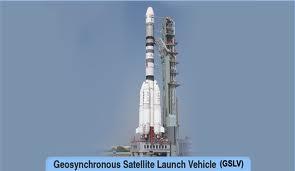
ISRO is successful in establishing two major space systems, INSAT for communication, television broadcastingand meteorological services, and Indian Remote Sensing Satellites (IRS) system for resources monitoring and management. ISRO has developed two satellite launch vehicles, PSLV and GSLV, to place INSAT and IRS satellites in the required orbits.

Chronology of Indian Space History


1963 - First sounding rocket launched from TERLS (November 21, 1963).


1965 -Space Science and Technology Centre (SSTC) established in Thumba.

1967 - Satellite Telecommunication Earth Station set up at Ahmedabad.

1969 - Indian Space Research Organisation (ISRO) formed under Department of Atomic Energy.

1972 - Space Commission and Department of Space set up. ISRO brought under DOS (June 1, 1972).

1975 - ISRO becomes Government Organisation (April 1, 1975). First Indian Satellite, Aryabhata, launched (April 19, 1975).

1979 - Bhaskara-I, an experimental satellite for earth observations, launched (June 7, 1979). First Experimental launch of SLV-3 with Rohini Technology Payload on board (August 10, 1979).Satellite could not be placed in orbit.

1981- First developmental launch of SLV-3.

1984 - Indo-Soviet manned space mission (April 1984).

1987 - First developmental launch of ASLV with SROSS-1 satellite on board (March 24, 1987). Satellite could not be placed in orbit.

2001 - First Launch of the GSLV successfully completed on April 18, 2001.

2002 - ISRO's Polar Satellite Launch Vehicle, PSLV-C4, successfully launched KALPANA-1 satellite from Sriharikota(September 12, 2002). Successful launch of INSAT-3C by Ariane from Kourou French Guyana, (January 24, 2002).

2003 - ISRO's Polar Satellite Launch Vehicle, PSLV-C5, successfully launched RESOURCESAT-1 (IRS-P6) satellite from Sriharikota(October 17, 2003). Successful launch of INSAT-3E by Ariane from Kourou French Guyana, (September 28, 2003). The Second developmental launch of GSLV-D2 with GSAT-2 on board fromSriharikota (May 8, 2003). Successful launch of INSAT-3A by Ariane from Kourou French Guyana, (April 10, 2003).

2004 - The first operational flight of GSLV (GSLV-F01) successfully launched EDUSAT from SDSC SHAR, Sriharikota (September 20, 2004)

2005 - Successful launch of INSAT-4A by Ariane from Kourou French Guyana, (December 22, 2005). ISRO's Polar Satellite Launch Vehicle, PSLV-C6, successfully launched CARTOSAT-1 and HAMSAT satellites from Sriharikota (May 5, 2005).

2006 - Second operational flight of GSLV with Insat-4C. For the first time, an Indian rocket carried acommunication satellite but the mission failed.

2007 - ISRO launches India’s CARTOSAT-2 and Space Capsule Recovery Experiment (SRE-1) and Indonesia’s LAPAN-TUBSAT and Argentina’s PEHUENSAT-1 at one go on January 10, 2007. Successful launch of INSAT-4B by Ariane-5 from Kourou French Guyana, (March 12, 2007). PSLV-C8 successfully launched Italian astronomical satellite AGILE from Sriharikota on April 23. Successful launch of GSLV with INSAT-4CR on board from SDSC SHAR on September 2.

2008 - Launch of Israeli satellite Tecsar by PSLV. Launch of two Indian and eight foreign satellites by a single PSLV. India's first moon mission Chandrayaan-1 by PSLV.

2009 - Launch of Radar Imaging Satellite (Risat-2) and Anusat from Anna University (first satellite from an Indian university) by PSLV. Launch of seven satellites by PSLV, including India's Oceansat.

2010 - Launch of Cartosat-2B, STUDSAT and three small foreign satellites by PSLV.

2011 - Launch of Resourcest-2 and two small satellites by PSLV. Launch of GSAT-12 by PSLV. Launch of Megha Tropiques and three small satellites by PSLV.

2012 - Launch of Risat-1 by PSLV. Launch of French satellite SPOT 6 and Japanese satellite Proiteres.

Aero India 2013


Aero India 2013


BOUT THE EVENT

The Aero India is titled as one of the most premiere air show of India and is organized at Air Force Station Yelahanka, Bengaluru, Karnataka, India. Managed by Confederation of Indian Industry, it is emerged out as a niche on the international arena as renowned aerospace exposition. It proves to be an ideal platform in bringing together eminent manufacturers, vendors, suppliers of the aviation industry under one roof.
Organizer: Confederation of Indian Industry


Aero India 2013


Aero India has already carved a niche for itself globally as a premier aerospace exhibition, with seven successful editions organized between 1996 and 2011. In Aero India 2011, the participation of exhibitors from 29 countries with 675 companies (380 overseas + 295 domestic) and 47 overseas delegations was accommodated over a gross exhibition area of 75,000 sqm (including outdoor), which was nearly 57% more than the previous edition in 2009. The ninth edition of Aero India will be held at Air Force Station, Yelahanka, near Bangalore from 6 Feb to 10 Feb in 2013. Aero India 2013 will be organized in February 2013 and will provide a significant platform in bolstering business opportunities in the international aviation sector. It is favorably poised an exponential growth over previous edition. A rapidly growing economy, defense preparedness challenges and opening up of defense production to private sector, have given a major fillip to the defense industry in India. It has also become a hub center for defense business in the Asian region.


Monday, 28 January 2013

Complete Analysis and specification of Agni V Ballistic Missile

Complete Analysis and specification of Agni V Ballistic Missile


India  successfully fired Agni-V , the long range Ballistic Nuclear Missile  from Wheeler Island of Orissa. It is capable of attacking any target upto 6000 km away  which is much more than the diameter of China. It has been developed by Defense Research and  development Organization (DRDO) of India.  The estimated cost of making this missile unit is about 40 Crores Indian Rupees.
The technical Specifications of Agni V can be summarized below
Weight: 50,000 kg
Length: 17.5m
Maximum Range:6000km
Warhead: 1000kg on Nuclear Weapon
Engine: 3 Stage Solid
Max Speed: 24 Mach
The Agni-V will be operational by 2014-2015 after four to five repeatable tests by the DRDO.
Agni-V carries  MIRV (multiple independently target-able re-entry vehicles) payloads being concurrently developed. A single MIRVed missile can deliver multiple warheads at different targets.
With a “launch mass” of around 50 tonne and a development cost of over Rs 2,500 crore, Agni-V  incorporates advanced technologies involving ring laser gyroscope and accelerometer for navigation and guidance
On April 19, 2012 at 8.07 am, the Agni V was successfully test fired by DRDO from Wheeler Island off the coast of Orissa.  The test launch was made from the Launch Complex 4 of the Integrated Test Range (ITR) at Wheeler Island using a rail mobile launcher.  The flight time lasted 20 minutes and the third stage fired the re-entry vehicle into the atmosphere at an altitude of 100 kms. The missile re-entry vehicle subsequently impacted the pre-designated target point more than 5,000 kms away in the Indian Ocean.  The director of the test range, S.P. Das informed BBC that all test parameters were met.
Agni V missile details

Propulsion

The Agni-V is a three stage solid fueled missile with composite motor casing in the third stage. In many aspects, the Agni-5 carries forward the Agni-3 pedigree. With composites used extensively to reduce weight, and a third stage added on (the Agni-3 was a two-stage missile), the Agni-5 can fly 1,500 km further than the 3,500 km range Agni-III. Two stages of this missile will be made of composite material.Advanced technologies like ring laser gyroscope and accelerometer will be used in the new missile.”You can reduce the payload and (further) increase the range of Agni-V” Saraswat told the Reuters in Feb 2010.

Mobility

“The Agni-5 is specially tailored for road-mobility,” explains Avinash Chander, Director, ASL. “With the canister having been successfully developed, all India’s future land-based strategic missiles will be canisterised as well”. The missile will utilize a canister and will be launched from it. Made of maraging steel, a canister must provide a hermitically sealed atmosphere that preserves the missile for years. During firing, the canister must absorb enormous stresses when a thrust of 300 to 400 tonnes is generated to eject the 50-tonne missile.

MIRVs

Agni-V will feature Multiple Independent Re-entry Vehicles (MIRVs) with each missile being capable of carrying 3-10 separate nuclear warheads. Each warhead can be assigned to a different target, separated by hundreds of kilometres; alternatively, two or more warheads can be assigned to one target. MIRVs ensure a credible second strike capability even with few missiles.

SOURCE:http://world-defece-review.blogspot.in/2012/04/agni-5-launch-pictures.html

INDIA''s Underwater N-missile test successful

INDIA''s  Underwater N-missile test successful


India's elusive nuclear weapon triad - the capability to fire nukes from the land, air and sea - has taken another leap closer to becoming an operational reality. Even as the indigenous nuclear submarine INS Arihant gets ready for sea trials, the country's first underwater ballistic missile "successfully" completed its developmental trials on Sunday.

With this twelfth test of the K-15 missile conducted from a submerged platform or pontoon in the Bay of Bengal, DRDO officials said the 750-km range submarine-launched ballistic missile (SLBM) was now ready for induction.

"The two-stage missile, which rapidly climbed to a 20-km altitude after being launched from the pontoon, was tested for its full range over 700-km. This was its last developmental test, in which all mission objectives were met," said an official.

"Now, the 10-metre tall missile, which can carry a one-tonne nuclear warhead, will undergo a user-trial within a month before it's integrated into the submarine. Only the US, Russia, France and China have successfully developed SLBMs till now," he added.

There is reason to cheer but the bubbly can only be popped once the K-15 missiles are successfully tested from the 6,000-tonne INS Arihant, the country's first indigenous nuclear-powered submarine, which is now all set to undergo "sea-acceptance trials" after its miniature 83 MW pressurized light-water reactor goes "critical" at Visakhapatnam soon.

Navy chief Admiral D K Joshi last month had alluded to this, holding that the nation would get "good news" on this front "very soon". INS Arihant has been undergoing extensive "harbor-acceptance trials", with all its pipelines being "cleared and tested" on shore-based steam for several months now, before its reactor is "fired" for the sea-trials.

Built with four silos to carry 12 K-15s, or four of the 3,500-km range K-4 missiles under-development at present, INS Arihant will of course have to test-fire the 10-tonne missile during the sea trials before it can be said that India's long-awaited nuclear triad has finally become operational.

The first two legs of the triad, already in place with the armed forces, are the Agni series of missiles and fighters like Sukhoi-30MKIs and Mirage-2000s configured to deliver nuclear warheads.

The absence of an operational SLBM, however, has for long left a "big credibility gap" in the country's nuclear deterrence posture. Only a nuclear-powered submarine, which can stay underwater for extended periods, armed with nuclear-tipped missiles can provide a country with effective and difficult-to-detect "second or retaliatory strike capabilities".

But the development of both INS Arihant and K-15 has meandered for well over a decade now. India may now have the INS Chakra, the Akula-II class nuclear-propelled submarine leased from Russia for 10 years, but it did not come armed with "strategic" missiles due to international treaties.

The utility of SSBNs (nuclear submarines with long range missiles) can be gauged from the fact that even the US and Russia are ensuring that two-thirds of the strategic warheads they eventually retain under arms reduction agreements will be in the shape of SLBMs. Consequently, INS Arihant and its three follow-on submarines in the process of being built, along with the K-15 and K-4 missiles, are considered critical for India's "strategic deterrence and autonomy". 


News curtsy :http://timesofindia.indiatimes.com/india/Underwater-N-missile-test-successful/articleshow/18213517.cms 

Wednesday, 23 January 2013

The Great INDIAN Netaji Subash Chandra Bose


Today i.e. 23rd January is the 115 th Birthday of Subhash Chandra Bose, the great patriot of India. He was born on January 23, 1897 in Cuttack, Orissa. His father Janaki Nath Bose was a famous lawyer and his mother Prabhavati Devi was a pious and religious lady. Subhas Chandra Bose was the ninth child among fourteen siblings. Subhas Chandra Bose was a brilliant student right from the childhood. He was strongly influenced by Swami Vivekananda's teachings. He joined the Indian civil services in England but deeply disturbed by the Jallianwalla Bagh massacre, and returned to India. He was the first Indian to resign from the Indian Civil Service. The Under Secretary of State for India sent for him. Subhash told him, I do not think one can be loyal to the British Raj and yet serve India honestly, heart and soul.

SubhashChandra Bose advocated complete freedom for India, whereas the congress committee wanted it in phases, through a dominion status but S...